The Biggest Hot-Weather Hydration Mistake: Thinking Ice-Cold Drinks Are Always Best
Most people reach for ice-cold drinks during hot weather, but the body cools itself mainly through sweating and evaporation. This Venus Health Academy blog explores what science says about hot drinks, cold drinks and smarter hydration in the heat.
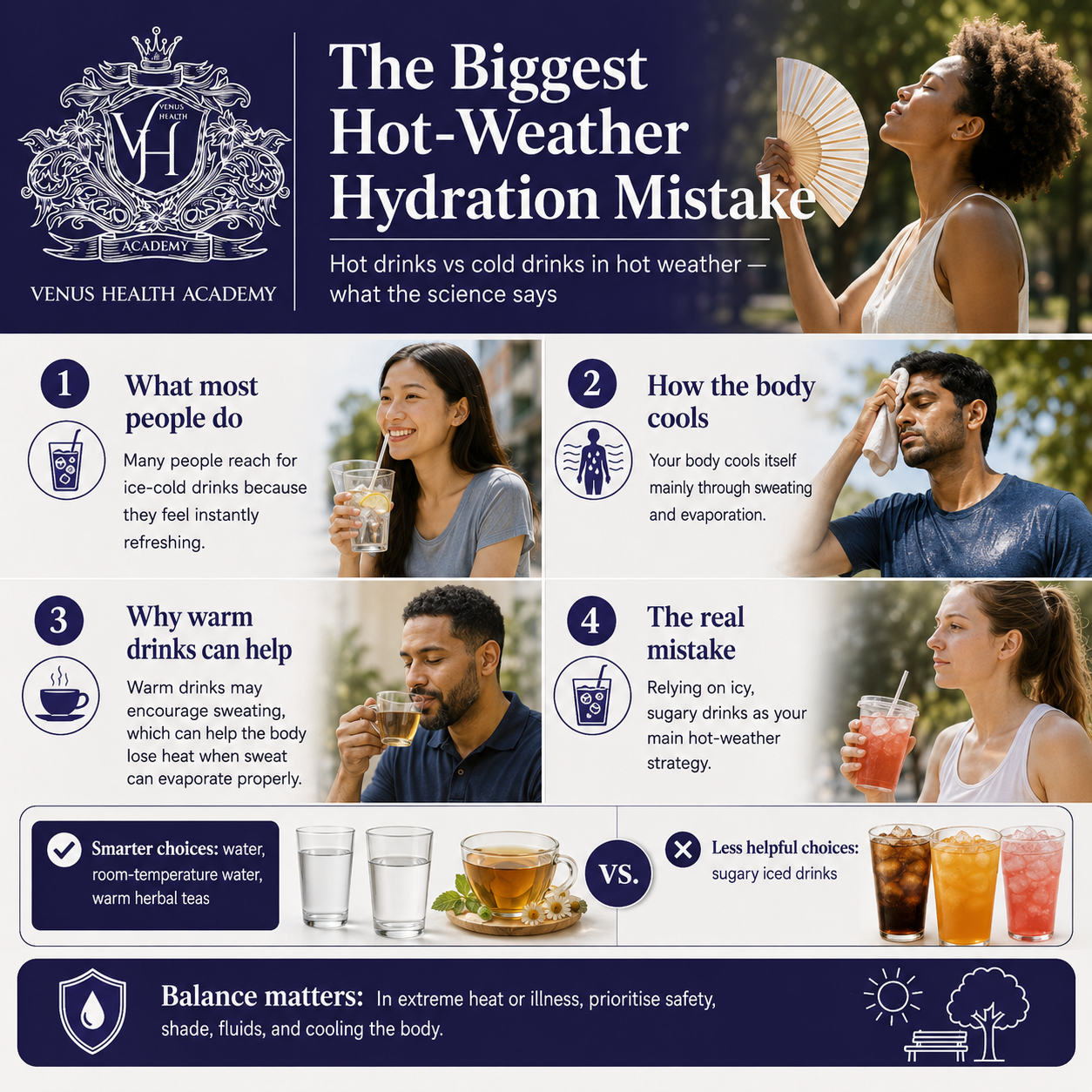
When the weather is hot, most people instinctively reach for ice-cold water, iced coffee, fizzy drinks or freezing-cold juices because they feel cooling. But the body does not cool itself simply because something cold enters the mouth or stomach. The body cools itself mainly through thermoregulation: widening blood vessels near the skin, producing sweat, and allowing that sweat to evaporate.
This is where the science becomes interesting. Warm or hot drinks may actually help the body cool down in certain conditions because they can stimulate sweating. A 2012 study found that drinking warm fluid during physical activity lowered body heat storage, but only when sweat was able to fully evaporate. In other words, a hot drink may support cooling when the environment allows sweat to evaporate properly, such as in dry heat, loose clothing, shade or good airflow.
The key point is this: the hot drink itself is not magically cooling the body. It is the body’s response to the warm drink that matters. Warm receptors in the throat, oesophagus and stomach may signal the body to increase sweating. If that sweat evaporates, heat leaves the body more effectively.
Cold drinks are not automatically “bad”. They can feel refreshing and may help people drink more fluid, especially when they are dehydrated or uncomfortable in the heat. Research has shown that cold drinks can improve thermal comfort, meaning people feel cooler, although the effect on sweating and body temperature is more complex.
The real mistake is assuming that freezing-cold drinks are always the best way to cool the body. Very cold drinks may give quick relief, but they do not replace the body’s natural cooling process. In some cases, they may reduce sweating temporarily, while the body still needs to release heat through the skin.
The biggest problem is often not cold water itself, but the cold sugary drinks people rely on during hot weather. Fizzy drinks, iced coffees, sweet juices and energy drinks may feel refreshing, but they can add sugar, caffeine and additives without truly supporting hydration. UK hot-weather advice recommends drinking fluids regularly, preventing dehydration, limiting alcohol, and being sensible with drinks that may work against hydration.
It is also important to be balanced. During a heatwave, NHS advice recommends keeping out of the heat where possible, staying in the shade, wearing light clothing, cooling the body, drinking extra fluids, and avoiding alcohol. NHS guidance also advises regular cold drinks and avoiding hot drinks in high-heat situations, especially where someone may be at risk of overheating.
So, the Venus Health Academy message is not that everyone should drink hot drinks in every heatwave. The message is that the body is more intelligent than the “cold equals cooling” myth. A warm herbal tea, warm water or room-temperature water may be helpful in the right conditions, especially when the body is able to sweat and that sweat can evaporate.
A smarter hot-weather approach is to drink regularly, avoid relying on sugary iced drinks, wear loose natural fabrics, stay in the shade, allow airflow, and listen to your body. If you are sweating heavily, you may also need minerals and electrolytes through food, natural mineral-rich drinks or appropriate electrolyte support.
The body does not need to be shocked with freezing-cold drinks all day. It needs steady hydration, mineral support, good airflow and the ability to regulate heat naturally.
Hot drinks can help in the right environment. Cold drinks can help in the right situation. But the biggest mistake is believing that ice-cold sugary drinks are the healthiest or most effective way to cool the body during hot weather.
References
[1] www.ncbi.nlm.nih.gov/pubmed/22574769 Bain, A. R. et al. Body heat storage during physical activity is lower with hot fluid ingestion under conditions that permit full sweat evaporation. Acta Physiologica, 2012.
[2] www.ncbi.nlm.nih.gov/pmc/articles/PMC3762624 Hosseinlou, A. et al. The effect of water temperature and voluntary drinking on the post rehydration sweating. International Journal of Clinical and Experimental Medicine, 2013.
[3] www.ncbi.nlm.nih.gov/pubmed/30203296 Barwood, M. J. et al. The effect of hot and cold drinks on thermoregulation, perception and performance. European Journal of Applied Physiology, 2018.
[4] www.nhs.uk/live-well/seasonal-health/heatwave-how-to-cope-in-hot-weather NHS. Heatwave: how to cope in hot weather.